
From Walk-In to Loyal Customer: How Beauty CRM Software Supports Retention
Oct 19 2026
Key Takeaways
- Beauty CRM software captures important details such as client preferences, package usage, and treatment history from the very first visit, so the second appointment feels like a natural continuation rather than starting from scratch.
- Walk-in clients can leave without a future booking confirmed. There’s no prior commitment from either side, and the window to change that closes within a few days. The right intake process, backed by beauty salon CRM software, closes that window by capturing the details that make each follow-up feel personal rather than generic.
- A client who feels remembered at a salon has a real reason to come back. The data collected during the first visit is what makes that possible at scale.
- Customer relationship management tools track the exact window between a client’s first and second visit, which is the retention period where the highest drop-off happens.
- Salon POS/ CRM software that connects intake, booking, and follow-up into one flow means no client detail gets lost between the treatment room and the front desk.
Introduction
Walk-in clients are your clearest test of whether your retention system works. They didn’t come from a campaign or a referral. They walked past, came in on a whim, and gave you one session to make an impression. The only thing that brings them back is what you do with that session after they leave. What determines whether they come back has nothing to do with the treatment itself. It comes down to what happens in the next 72 hours: whether you follow up, whether the message feels written for them specifically, and whether booking again is easy. That window is where retention is won or lost, and it’s entirely within your control.
How Salons Lose Walk-In Clients Before the Follow-Up Even Starts
A walk-in who leaves without rebooking hasn’t rejected your salon. She just hasn’t committed yet. That’s a specific kind of opportunity, and it requires a specific response. The challenge is that salons without a system in place have no consistent process for what happens when a new client walks out without a future appointment. Some staff follow up. Some don’t. The ones who do rely on memory or personal notes. When your salon gets busier, those follow-ups fall away. A properly set-up beauty salon CRM software changes that outcome. It doesn’t depend on whether a particular staff member remembers to send a message. The system records who came in, what they had, and when they arrived. From there, a follow-up can be scheduled automatically, timed to reach your client before she has the chance to book somewhere else. The goal isn’t to chase the client. It’s to reach her at the right moment, with something that feels relevant to what she actually experienced.What Gets Recorded During the First Visit Makes Every Visit After It Better
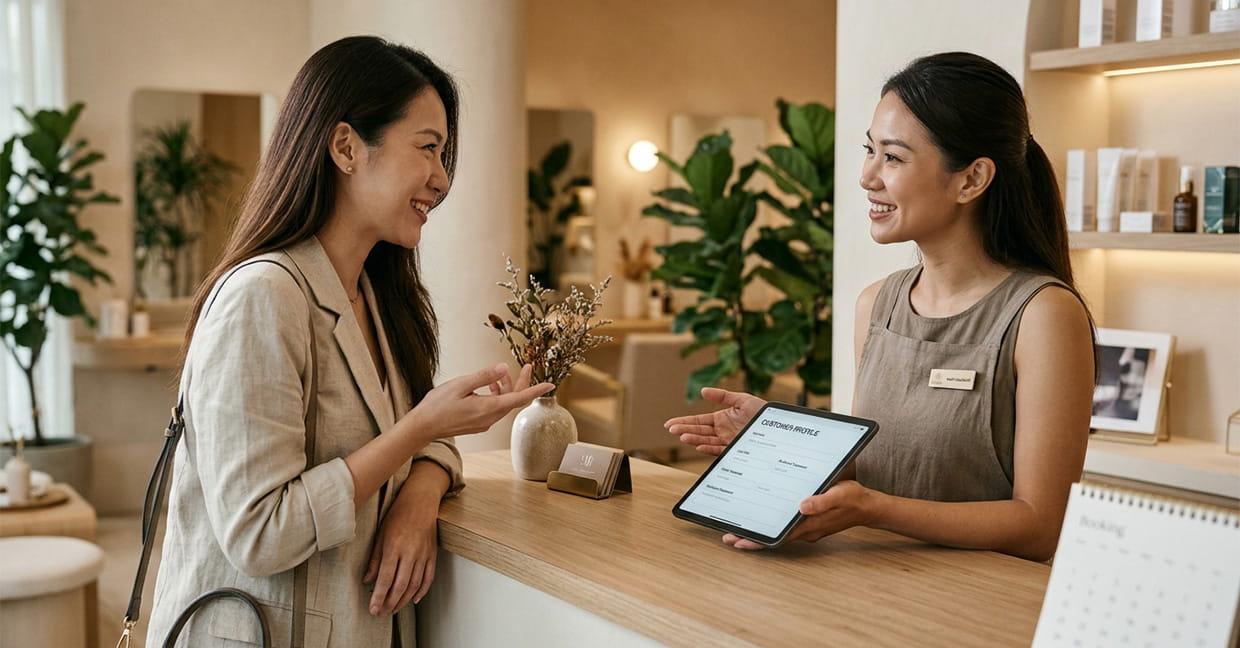
The intake conversation matters far more than it looks like at the moment. A client who mentions that her skin is sensitive or that she prefers lighter pressure isn’t just making small talk. She’s giving you information that, if captured properly, will make every future appointment feel more personalised. Customer relationship management tools that connect directly to your booking and treatment flow let therapists and front desk staff record these preferences during the session, while everything is fresh. The notes land against the client’s profile automatically. When she comes back next month, the therapist already knows. This matters because clients do not repeat themselves. They mention a preference once and expect it to be remembered. A salon that tracks this earns a reputation for attentiveness that’s hard to explain but easy to feel. A few things worth capturing from day one:- Treatment preferences and any sensitivities
- Products used or recommended during the visit
- How she found out about the salon
- Whether she expressed interest in a package or a follow-up service
- The therapist she connected with, if relevant

The Retention Window Is Specific and Short
If a client comes back for a second visit, the chance of a third goes up significantly. If it doesn’t happen within a reasonable window, the probability of her returning at all starts to drop. When a client comes back for a second visit, the relationship has a much stronger chance of continuing. Getting that second visit is the real challenge. A 5% increase in customer retention can raise profits by 25 to 95%, which gives you a sense of how much each returning client is worth. That makes the follow-up after the first visit a process worth getting right. If you’re not tracking which new clients haven’t rebooked after five days, you’re managing retention by memory, and the drop-off happens quietly without anyone noticing in time. A visit tracker built into your management platform flags clients who haven’t rebooked after a set number of days, giving you or your front desk a clear list of who needs a nudge. The message doesn’t have to be a promotional offer. Something straightforward and personal, referencing the treatment she had, is enough to prompt action. The salon that reaches out within the right window gets the next booking. The one that waits too long finds the client has already moved on.Why Client Information in Multiple Places Breaks the Follow-Up
One of the reasons follow-up breaks down is that client information ends up scattered across different places. A new client fills in a physical form. Preferences get mentioned verbally. The therapist writes a note in a personal notebook. None of it ends up in a single place your front desk can access when the client calls or walks in next time. A beauty CRM software that runs intake, booking, client notes, and communication in one place removes that fragmentation. There’s one profile per client. Everything lives there. Any staff member can pull it up and immediately see the full picture: what she had, what she mentioned, how long since her last visit, whether she has sessions remaining on any package. Because of this, it also matters when your clients come in on different days and see different staff. The relationship shouldn’t feel like it resets every time the client is assigned a new therapist. With a shared client record, continuity happens automatically. The client feels known because the system ensures she is. Retention comes down to one thing: knowing enough about each client that every visit feels like you were expecting her.From First Visit to Long-Term Client: What the Follow-Up Flow Looks Like
The process doesn’t need to be elaborate. A simple, well-timed follow-up based on real data does the job. After the first visit is logged in Studio Manager’s booking and client platform, the system can flag the client if she hasn’t booked again within a defined period. A message goes out, personalised with her name and referencing the treatment she had. If she responds, the booking happens right there. If she doesn’t, a second prompt can follow a week later. The beauty CRM software sets the trigger logic once, and it runs consistently across every new client, regardless of how busy your salon gets. No manual intervention needed at every step. In practice, this also means that when a client does return, the intake process is already done. Her profile is populated. The therapist walks in knowing what to expect. The experience feels consistent precisely because the groundwork happened in the background. Staff performance also comes into this. Salons using management software that tracks consultant follow-through can see which team members are converting first-time clients into repeat bookings and which ones aren’t, without having to ask anyone directly.